



Best Forex Books for Beginners in 2026: 10 Must-Reads That Actually Teach You How to Trade



Learning forex trading from random YouTube videos, Telegram groups, and social media posts is one of the most reliable ways to develop bad habits. The information is fragmented, often contradictory, and almost always missing the context that makes it useful.
Books are different. The best forex books for beginners give you a structured, sequential understanding of how the market actually works — from currency pair mechanics to chart reading to the psychology that determines whether a trader survives long-term. They were written by people who traded for a living and had the time to organise what they learned into something teachable.
This guide covers the 10 best forex books for beginners in 2026 — not a generic list pulled from Amazon rankings, but a curated reading path from absolute basics to technical analysis to trading psychology. Read them in order and you'll build the kind of foundation that most traders spend years trying to piece together on their own.
What Makes a Forex Book Worth Reading?
Before the list, it's worth understanding what separates a useful trading book from the hundreds of low-quality titles that clutter the market. The best beginner forex books share three qualities:
They are actionable. You can apply what you read to a chart the same day. Concepts translate into specific rules, not vague principles.
They are honest about risk. No credible trading book promises overnight profits or guaranteed returns. The best ones spend as much time on what goes wrong as on what goes right.
Their principles are timeless. Market structure, price action, and trading psychology don't expire with software updates. A book published in 2004 on candlestick patterns is as relevant in 2026 as the day it was written.

Reading Path — How to Use This List
The 10 books below are organised as a curriculum, not a random collection:
- Books 1–3: Market mechanics and basics — start here if you've never traded
- Books 4–5: Technical analysis and charting — once you understand how markets work
- Books 6–7: Strategy — specific setups and approaches to put into practice
- Books 8–9: Trading psychology — the difference between knowing and doing
- Book 10: Additional reading — market context and long-term thinking
1. Currency Trading for Dummies — Kathleen Brooks & Brian Dolan
Best for: Absolute beginners who need to understand market mechanics before anything else
Don't let the title put you off. Currency Trading for Dummies is one of the most comprehensive introductions to the forex market available, written by Kathleen Brooks and Brian Dolan — both former chief strategists at major institutional brokerages. The fourth edition has been updated to include broader market access topics including ETFs, options, futures, crypto exposure, and updated regulation notes.
The book covers everything a new trader needs to understand before opening a live account: what currency pairs are and how they're priced, who the major players in the forex market are (central banks, institutional traders, commercial firms, retail participants), how economic data like interest rate decisions and non-farm payroll reports move currency prices, and how to read a basic chart and place a trade.
What makes it genuinely useful for beginners is that it treats trading as a process rather than a signal hunt. It builds conceptual understanding before strategy — which is the correct order, even though most beginners want to skip straight to entries.
What you'll learn:
- How currency pairs work and what drives their prices
- The structure of the forex market and who the major participants are
- Fundamental analysis basics: interest rates, inflation, economic data
- Technical analysis introduction: trend lines, support/resistance, basic indicators
- Risk management fundamentals: stop-loss orders, position sizing, leverage
Read this first. Then open a demo account and begin applying the mechanics before moving to the next book.
2. Forex Trading: The Basics Explained in Simple Terms — Jim Brown
Best for: Beginners who want a fast, practical introduction with specific rules they can apply immediately
Jim Brown's approach is refreshingly direct. This concise book — just 91 pages in its core edition — strips away the complexity that overwhelms most beginning traders and focuses on what a new trader actually needs to know to start executing trades with a defined plan.
Brown covers how to open a trading account, how to use a trading platform, how to read basic charts, and how to place your first trades. Crucially, he includes specific entry and exit signals, risk management rules, position sizing formulas, and a framework for developing a simple trading plan a beginner can follow without getting lost in an overcomplicated indicator system.
The book also includes downloadable trading indicators so you can apply what you learn directly to your platform. Brown is self-taught and writes from lived experience rather than academic theory — which gives the book a practical honesty that more polished publications sometimes lack.
What you'll learn:
- How to read forex pairs and understand bid/ask spreads
- How to select a broker and set up a trading account
- Basic entry and exit strategies explained in plain language
- How to calculate position size based on account balance and risk tolerance
- A simple trading plan framework suitable for beginners
Pair this with book 1. Between Currency Trading for Dummies (market structure) and Jim Brown (practical execution), you have everything needed to trade on a demo account with intention.
3. A Three-Dimensional Approach to Forex Trading — Anna Coulling
Best for: Beginners ready to move from basics to a more complete understanding of what drives currency markets
Anna Coulling's book introduces a concept that most beginner texts ignore entirely: that price, volume, and time are three separate but interconnected dimensions of market analysis, and that reading them together produces far more reliable signals than any single indicator.
Coulling provides detailed information about different currency types, their typical behaviour, trading volumes, and the sessions in which they're most active. She explains how to identify good trading opportunities before committing capital — a critical skill that most beginners develop only after losing money on low-probability setups.
The book is written in clear, accessible language and progresses methodically from foundational concepts to practical application. It's particularly useful for traders who found their early reading too abstract — Coulling consistently grounds her explanations in specific market examples.
What you'll learn:
- How to read volume alongside price for higher-confidence signals
- The relationship between different currency pairs and market sessions
- How to identify high-probability trading opportunities before entering
- Why most retail traders lose (and how to avoid the common traps)
- A structured approach to building market awareness before trading
4. Japanese Candlestick Charting Techniques — Steve Nison
Best for: Traders ready to learn chart reading at a professional level
Steve Nison's book is the text that introduced Japanese candlestick analysis to Western markets. Before Nison published this work, most Western technical analysts used bar charts or line charts. Candlestick charting — which has been used in Japanese rice markets for centuries — provides significantly more visual information about market psychology in each price period, and Nison's book remains the definitive reference on the subject.
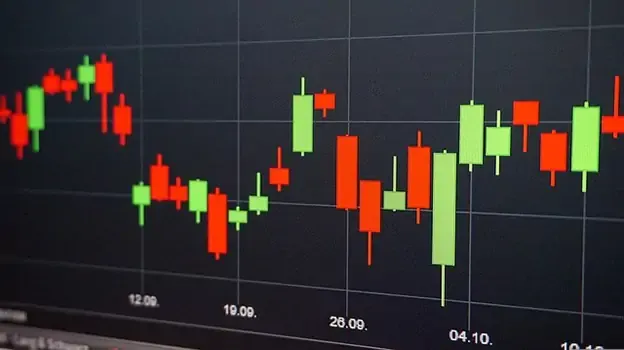
The book covers dozens of candlestick patterns in systematic depth: what they signal psychologically, how they form, and how to interpret them in the context of surrounding price action. Patterns covered include the doji, engulfing patterns, morning and evening stars, hammer, hanging man, shooting star, and many more — each with clear illustrations and real market examples.
Nison also shows how candlestick analysis can be combined with moving averages, support and resistance levels, and other technical tools to create higher-confidence setups. This multi-tool approach is how professional traders actually use candlestick analysis in practice.
What you'll learn:
- How to identify and interpret the major candlestick reversal and continuation patterns
- How candlestick signals differ from bar chart and line chart signals
- How to combine candlestick patterns with other technical tools for confirmation
- How to identify early warning signs of trend exhaustion and potential reversals
- Entry and exit timing using candlestick signals
This is the technical foundation. Once you can read a candlestick chart fluently, every strategy you encounter becomes easier to understand and apply.
5. The Black Book of Forex Trading — Paul Langer
Best for: Traders who have grasped the basics and want a more complete trading system
The Black Book of Forex Trading goes deeper than the introductory texts on this list. Langer provides a comprehensive treatment of the most important technical concepts in forex trading — support and resistance, trend identification, breakout strategies, swing trading setups, and scalping frameworks — and organises them into a coherent system rather than a collection of isolated techniques.
The book is particularly strong on position sizing and capital management. Langer explains not just how to calculate position size but why it matters more than entry selection in determining long-term profitability. There are also chapters on how to handle losing periods — a topic most trading books avoid — including how to reduce size, review your process, and avoid the spiral of revenge trading that ends most retail trading careers.
What you'll learn:
- Support and resistance identification and how to trade around key levels
- Trend trading, breakout strategies, swing setups, and scalping approaches
- How to calculate position sizes and manage risk across different setups
- Practical guidance for surviving drawdown periods without account destruction
- How to build a rules-based system from the concepts covered
6. Day Trading and Swing Trading the Currency Market — Kathy Lien
Best for: Traders who want specific, strategy-based guidance on active forex trading
Kathy Lien is one of the most respected currency analysts in the world — a former head of research at GFT, managing director at BK Asset Management, and a regular contributor to Bloomberg, CNBC, and Reuters. Her book brings institutional-grade strategy analysis into an accessible format for active retail traders.
The book focuses on both day trading and swing trading approaches — covering how to use technical analysis to identify trends, how to determine when to enter based on current market conditions, and how to execute trades using stop-loss and take-profit orders effectively. Lien is particularly strong on how economic indicators move currency pairs: how to trade non-farm payroll reports, interest rate decisions, and other high-impact events with defined rules rather than guesswork.
What you'll learn:
- Day trading and swing trading strategies with specific entry and exit rules
- How to use technical indicators including RSI and Bollinger Bands for decision-making
- How to trade economic news events: NFP, FOMC, CPI, interest rate decisions
- How interest rate differentials drive long-term currency trends
- Timing strategies for different market sessions (London, New York, Asian)
This is the strategy manual. After building your foundation with the earlier books, Lien's work gives you specific, documented approaches to executing trades with defined rules.
7. How to Make a Living Trading Foreign Exchange — Courtney Smith
Best for: Traders who want a money-focused, strategy-heavy guide with a professional perspective
Courtney Smith's book is distinctive because it focuses directly on income generation rather than conceptual understanding. Where most beginner books spend the majority of their content explaining what forex is, Smith spends most of his book on six specific forex trading strategies designed to produce sustainable profits.
The strategies covered include breakout trading, the rejection rule (Smith's own proprietary technique designed to filter false breakouts and, according to the author, double the profitability of standard breakout approaches), moving average systems, and range trading methods. Each strategy includes entry rules, stop placement guidance, and profit target logic.
The book also covers trading psychology and risk management — not as afterthoughts, but as central components of a professional trading approach.
What you'll learn:
- Six specific forex trading strategies with complete rule sets
- Smith's "rejection rule" — a breakout filter designed to reduce false signals
- Risk management frameworks for protecting capital while pursuing profits
- Trading psychology for maintaining discipline during losing periods
- How to treat forex trading as a professional income-generating activity
8. Trading in the Zone — Mark Douglas
Best for: Any trader who knows what to do but struggles to do it consistently
Trading in the Zone is the most important trading psychology book ever written. Mark Douglas spent decades working with professional traders as a performance coach and identified a single core insight that explains why most technically capable traders still lose money: the problem is not strategy, it is mindset.
Douglas argues that profitable trading requires a specific mental framework — what he calls "thinking in probabilities." Rather than needing to be right on any individual trade, a consistently profitable trader understands that they are executing a strategy with a positive expectancy over a large sample of trades, and that any individual outcome is statistically irrelevant. This framework eliminates the emotional reactions — fear, greed, revenge trading, paralysis — that cause technically capable traders to deviate from their rules at exactly the wrong moments.
This is the one book that experienced traders re-read every year. If you only purchase one book on trading psychology, make it this one.
What you'll learn:
- Why technical knowledge alone is insufficient for consistent profitability
- How to develop a probability-based mindset that removes emotional decision-making
- Why losing trades are a normal and expected part of any profitable strategy
- How to maintain discipline under pressure without relying on willpower alone
- The mental framework that separates consistently profitable traders from the rest
9. Reminiscences of a Stock Operator — Edwin Lefèvre
Best for: Traders who want timeless wisdom on speculation, psychology, and market behaviour
Reminiscences of a Stock Operator is a fictionalised account of Jesse Livermore's trading career — widely considered the greatest speculator in American financial history. Written in 1923 and based on extensive interviews with Livermore himself, the book reads like a novel but contains more practical insight about market behaviour, trading psychology, and the nature of speculation than most modern trading texts.
Livermore's observations about crowd psychology, trend following, patience in waiting for the right setup, and the discipline required to hold a winning position are as relevant in 2026 as they were a century ago. Markets are driven by human psychology, and human psychology does not change.
This is listed as additional reading — it will not teach you how to place a trade, but it will give you a framework for thinking about markets that the technical books cannot fully provide.
What you'll learn:
- How the psychology of speculation has remained constant across market generations
- The importance of patience and waiting for high-probability setups
- How crowd behaviour creates the trends and reversals technical traders look to exploit
- Why the biggest trading mistakes are almost always psychological rather than technical
- A narrative context for the principles covered in the psychology books above
10. The Big Short: Inside the Doomsday Machine — Michael Lewis
Best for: Traders who want to understand how markets can be fundamentally wrong — and what that means for risk management
Michael Lewis's account of the 2008 financial crisis focuses on the small group of traders who identified the housing market bubble and positioned to profit from its collapse. While not a forex trading manual, The Big Short teaches something that pure technical books cannot: that markets can remain irrational for longer than seems possible, that conventional wisdom can be catastrophically wrong, and that the traders who survive long-term are those who understand both the mechanics and the human behaviour that drives them.
For beginners, it provides essential context: understanding that the market is not a neutral mechanism but a system driven by incentives, psychology, and institutional behaviour is foundational to developing a realistic trading mindset.
Pros and Cons of Learning Forex from Books
Pros
- Structured learning path — books present information sequentially, building on each concept before introducing the next. This produces deeper understanding than fragmented online content.
- Timeless principles — the core concepts in the best forex books (market structure, price action, psychology) do not change with platform updates or market conditions.
- Money management depth — every book on this list covers capital preservation and risk management in more depth than any YouTube video or social media post.
- Long-term reference — you return to good trading books repeatedly as your experience grows and their content takes on new meaning.
Cons
- Books alone are not sufficient — reading is learning; trading is doing. Every concept in every book on this list needs to be tested on a demo account before being applied to live capital.
- Some content becomes dated — specific platform mechanics, broker details, and regulatory information can become outdated. Always verify current conditions independently.
- Risk of information overload — reading 10 books before taking your first trade is counterproductive. Read, practice, read more. The curriculum above is designed to be used alongside active demo trading, not as a prerequisite to it.
The Bottom Line
The forex market moves $9.6 trillion per day. The traders who succeed long-term are not those who found the best indicator or the most profitable signal service — they are the ones who built a genuine understanding of market mechanics, developed a rules-based strategy, and cultivated the psychological discipline to execute it consistently under pressure.
The 10 books on this list cover all three of those requirements. Work through them in order, apply each one on a demo account, and you will build a foundation that most self-taught traders spend years trying to piece together from scattered online sources.
Read. Practice. Then trade.
Frequently Asked Questions
Yes — and arguably more useful than ever. Short-form online content (videos, social posts, forums) is fast to consume but rarely teaches the full context behind any concept. Books force structured, sequential learning that short-form content is fundamentally incapable of providing. The traders who build the most durable foundations are almost always heavy readers.
Read books 1 and 2 on this list, then open a demo account and trade alongside your reading. The goal is not to finish the entire list before trading — it is to build understanding and practice simultaneously. Apply each concept on demo before proceeding to the next book.
Every book on this list covers risk management. It is not a coincidence — protecting capital is the single most important skill in trading, and every experienced author knows it. Pay particular attention to the risk management sections even when they feel less exciting than strategy content.
Books provide knowledge. Profitability requires knowledge, practical experience, psychological discipline, and time. Reading without demo trading builds theoretical knowledge without the execution skills or emotional experience needed to trade live markets successfully. Use this list as a curriculum, not a shortcut.
Start with Currency Trading for Dummies (Brooks & Dolan). It is the most comprehensive single introduction to the forex market available, covers all the essential mechanics, and sets up everything that follows on this list.
You can purchase forex trading books on online stores like Amazon or download them from reputable online sites.
It is important to start with a book that touches on all the forex basics to understand all the terms and strategies used in trading. A good example is: Currency Trading for Dummies by Brian Dolan.
Some of the best Forex books for beginners are those that explain market basics, trading psychology, risk management, and technical analysis in simple terms. Beginner-friendly books usually focus on building foundational knowledge rather than advanced strategies.
Forex books help beginners understand how the market works, avoid common mistakes, and develop a structured approach to trading. They provide insights into strategy, mindset, and risk management that cannot be learned through quick online content alone.
Yes. Forex books teach essential concepts like market structure, trading psychology, and money management. These skills are critical for long-term success and help traders move beyond guesswork and emotional decisions.
Beginners should ideally start with books that explain overall market basics first. After that, they can explore both technical and fundamental trading concepts to develop a balanced understanding.
Books provide knowledge, but practical experience is equally important. Beginners should combine reading with demo trading and consistent practice.
It’s better to focus on a few high-quality books rather than reading too many. Understanding and applying concepts is more valuable than consuming large amounts of information.
Yes. Most good beginner books emphasize risk management because protecting capital is one of the most important aspects of trading.
Absolutely. Books provide deeper insights, structured learning, and timeless trading principles that short-form content often lacks.
Guides About Forex for Beginners
Best Currency Pairs to Trade in the Sydney Forex Session
Best Currency Pairs to Trade in the Forex Asia Session
Best Currency Pairs to Trade in the New York Session
Best Currency Pairs to Trade in The London Session
Best Forex Currency Pairs to Scalp

Ready to apply disciplined risk to crypto? Explore Audacity Capital's new crypto instruments and bring your trading strategy.
Learn MoreNewsletter
Join our newsletter to stay up to date on features and releases.
Join Our Social & Community

Start Your Journey Today With Our Free Trial
Proudly showcase your skills and accomplishments through certificates and get recognition for your hard work and dedication from potential investors and peers.
Free Trial