


How to Control Emotions in Trading: 5 Practical Tips


How to control emotions in trading starts with preparation. A trader may analyse a stock correctly, yet panic-sell or chase a sharp move in Nifty when the market swings unexpectedly. This is emotional trading – acting on fear or greed instead of sticking to the plan. The goal isn’t to eliminate feelings (that’s impossible) but to prevent them from driving entry and exit decisions.
For example, if your Nifty setup doesn’t meet all criteria, a sudden spike shouldn’t force you in. To stay within discipline, having a clear trading plan and awareness of common emotional pitfalls (fear, greed, FOMO) is essential. If you need more on handling pressure during fast sessions, see our guide on day trading psychology.
In India’s volatile markets, controlling emotions is crucial. SEBI data shows that about 93% of retail F&O traders lose money over time, often because decisions get swayed by emotion. Remember this always and you will stay rational by following your rules.
Why Do Traders Make Emotional Decisions?
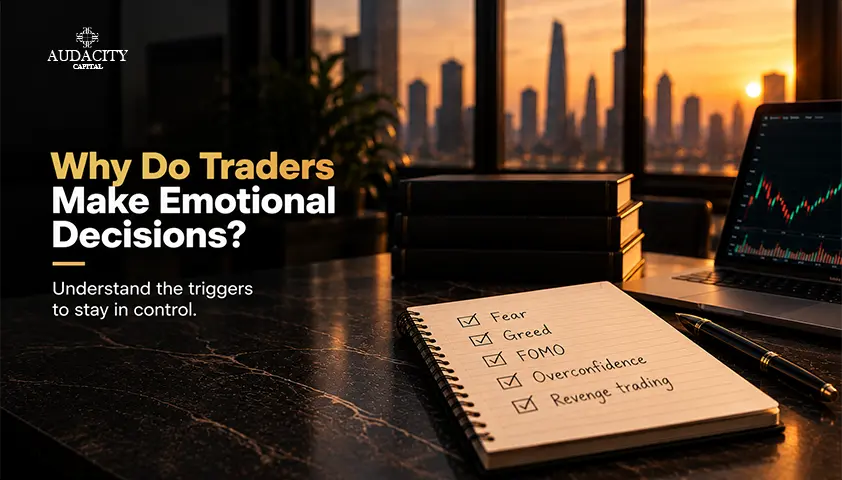
Pressure and uncertainty in trading lead to dangerous emotional decisions. Common situations include:
- Unplanned risk – A position is larger than you can comfortably handle. Every price tick feels like a crisis.
- Pressure to act – A fast market move (up or down) feels like “the train is leaving.” This can trigger panic buys or sells, even if your setup isn’t ready.
- Reacting to recent results – After a loss (or a big win), many traders immediately change strategy. A loss can create anxiety to “recover quickly,” while a winning streak can breed overconfidence.
Emotional trading isn’t the only risk as strategy flaws, costs and market conditions also cause losses. But emotion amplifies mistakes. In fact, regulators note the danger in derivatives: a recent SEBI study found 93% of individual F&O traders lost money between FY2022–FY2024, and in FY26 about 87.7% of retail equity-derivatives traders lost money. These figures reflect that most small traders don’t succeed in speculative segments. They underline why risk management and emotional control matter.
As it is commonly discussed, “fear and greed are the true motives behind market behaviour”. Recognising this helps you stay humble: every market move is not about you, and no plan wins every time.
How to Control Emotions in Trading?
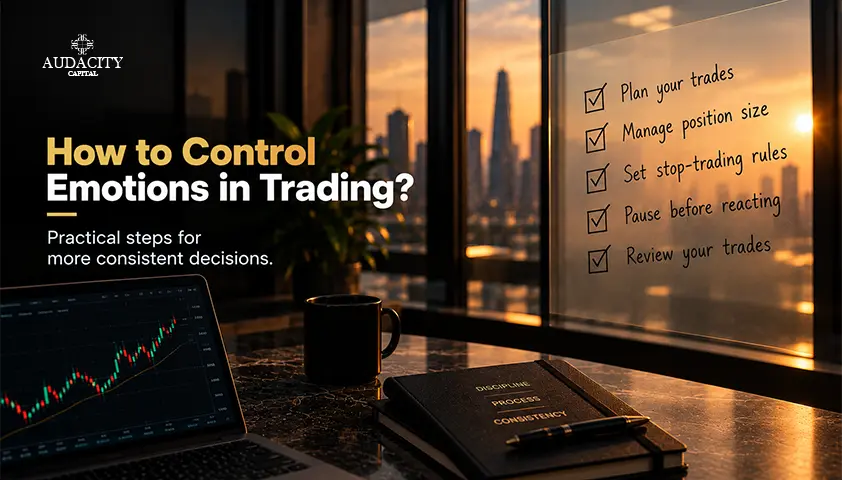
Here are practical steps to follow before, during and after each trade. Actions you choose, so emotion has less influence:
- Decide the entry and exit first: Note down indicators, patterns, news, or anything that makes a setup valid and what would cancel it, like a trend reversal. With that, also plan your profit target as well as your stop-loss. Say your Nifty strategy needs a breakout above a level you marked. The index may be rallying, but you wait for your signal. Clear rules stop fear or FOMO from making trades on the spot.
- Keep your position size manageable. If even a 1% move makes you anxious, your risk is too large. Before entering, ask: “If this trade hits my stop, will I still be calm?” If not, reduce size. Detailed planning lowers fear: “winning traders protect themselves by trading with a detailed plan and managing risk”. By capping risk (for example, risking only a small percentage of capital per trade), even a losing day won’t break you or provoke panic.
- Set a stop-trading rule. A stop-trading rule is a limit you set before the market opens. It should stop your session. That is because we expect discipline to break after a loss. You can mark a limit in advance for how much you can lose in a day. For example, you may step away if you hit your daily loss limit of, say, ₹5,000 or ₹10,000 or so. Another way is to stop if you have ignored your plan twice in a row. This is a risk control habit. Whilst it looks simple, it helps. It would be expected that it would stop revenge trading, which is throwing more at the market to chase losses.
- Pause before reacting to news or noise. In the age of social media, a news headline or a guru’s tip can feel urgent and reacting to it immediately involves risk. Rather, take a moment to check if the information is reliable and, more importantly, if the trade still fits your plan. For example, a breaking news headline might make you want to sell, but if your plan was to hold a position, remind yourself that “the market doesn’t care about your feelings”. Acting only on confirmed, plan-based signals eliminates many emotional mistakes.
- Review each trade afterwards: No matter if you trade less or more, maintain a journal that involves notes of why you entered a said trade, if you followed the rules, how you felt, etc. At week’s end, look for patterns.
Are you skipping your exit criteria? Entering based on tips? Overtrading out of boredom? Seeing these trends helps you improve. You may earn profit from one or two trades, but it doesn’t mean your method is a no-fail; neither does losing a few trades discredit it. Instead of just going by Profit & Loss, focus on the decision quality.
These five steps aren’t just another listicle, but they echo the advice of experienced traders. From years and for years to come, having a plan and sticking to it will make trading easier and harder. And over time, discipline like this can help you act on logic even when a trading chart is making your heart race faster.
What to Do When You Feel Unable to Follow Your Plan?
Having a trading plan and having the will to follow it are two different things. Even with your rules, emotions can still take over. If entering impulsive trades and ignoring your stops is a repetitive occurrence with you, follow this:
- Stop trading immediately: Don’t force another trade to “get back to even.” Trading under stress often worsens losses.
- Analyze calmly: Identify the trigger. Did you take on too much risk? Were you jumping into a trade without confirmation? Did recent market moves upset you? Pinpointing the cause prevents repeating it.
- Reduce exposure or practice: Cut your trade size in half when your fear or frustration is high. If that is difficult, step into a paper-trading mode for a while so that you can practice your rules without involving real money. This method also helps in rebuilding your confidence.
- Remember, losses are not personal: There’s no single trader who hasn’t faced a loss, so without taking them personally, plan how you respond to them. Taking breaks, reflecting, and reinforcing your trading plan is part of professional risk management. It’s how you overcome emotional slips.
Now these steps are there to make sure that you have a clear mind and not impulse decision making to control your next step. Good trading psychology is built by reviewing decisions, not just wishing for different results.
Final Thoughts
When you invest in building through preparation, risk control, and honest self-review, you prevent emotional trading. If you are wondering how to control emotions in trading, it starts with having rules written before the market opens and following them when pressure is high. You will still feel fear and excitement, that normal to never go away.
At the end, real trading without emotions doesn’t mean you will feel nothing at all. Instead, it means your decisions are not driven by what you feel. Just say to your rules for entry and exit rules, trade only with position sizes you are comfortable with, and review your trades objectively. Once you keep doing it, this disciplined approach over time will stop your emotions from overpowering your trading decisions.
Frequently Asked Questions
To prevent or stop emotional trading, always build a trading plan. Before you start trading, define your entry, exit, and risk, and stick to your stops and targets. Facing a loss is always possible, and the smart move here is to pause before immediately taking another trade.
Next, review your trades and emotions regularly, and over time it will train you to act on rules, not on fear or hope.
No, you can’t because when there’s money on the line, emotions are natural. Don’t aim to have zero emotions, but do aim to recognize your feelings and stick to your plan despite them. At times, you may feel anxious if a position moves against you, but if you have planned your move (hold or exit) in advance with all possible combinations, following that decision is “trading without emotion”.
Many traders make impulsive trades following a loss because it triggers anger/ panic to “make it back”. While this is normal, it can cloud your judgment. In such scenarios, it is important to break the cycle by taking a break, reviewing what led to the loss, and only trading again when you are calm.

Ready to apply disciplined risk to crypto? Explore Audacity Capital's new crypto instruments and bring your trading strategy.
Learn MoreNewsletter
Join our newsletter to stay up to date on features and releases.
Join Our Social & Community

Start Your Journey Today With Our Free Trial
Proudly showcase your skills and accomplishments through certificates and get recognition for your hard work and dedication from potential investors and peers.
Free TrialRelated Articles
Psychology of Greed in Trading
Learn how greed affects trading decisions, spot common warning signs, and discover practical ways to control emotions and manage trading risk.


Daily Habits Of Consistently Profitable Funded Traders

Trading With Confidence: Structure, Discipline, and the Path to Consistency

How Much Money Do You Need to Start Trading Stocks? (2026 Beginner’s Guide)
Learn how much money you need to start trading stocks. Explore capital requirements, risks, and how to trade with funded accounts at Audacity Capital.