



Lot Size and Leverage in Forex: A Complete Guide for Beginners



Lot size and leverage in Forex are two essential concepts that determine the size of your trades and the amount of capital required to open them. Lot size defines how many units of a currency pair you buy or sell, while leverage increases your buying power by allowing you to control larger positions with a smaller deposit. Understanding how lot size and leverage work together is crucial for managing risk, calculating position sizes, and becoming a consistently profitable trader. |
|---|
Key Takeaways
- Lot size determines your trade volume.
- Leverage determines how much buying power you have.
- Lot size affects your profit and loss.
- Leverage affects the margin required to open a trade.
- Higher leverage does not guarantee higher profits.
- Choosing the correct lot size is one of the most important aspects of risk management.
Introduction
Every Forex trader wants to maximise profits while keeping risk under control. However, many beginners focus on finding the perfect trading strategy while overlooking two of the most important concepts in Forex trading: lot size and leverage.
Although these terms are often mentioned together, they serve completely different purposes. Confusing one with the other can lead to poor risk management, oversized positions, and unnecessary losses.
Whether you're trading your own capital or working toward a funded account through Audacity Capital, understanding how lot size and leverage interact is essential. They determine how much you trade, how much margin is required, and how much you stand to gain—or lose—with every market movement.
In this guide, you'll learn:
- What lot size is
- What leverage is
- The difference between lot size and leverage
- How they work together
- How to calculate the right position size
- Common mistakes traders make
- Best practices for managing risk
By the end of this guide, you'll understand exactly how professional traders use lot size and leverage to trade consistently while protecting their capital.
What Is Lot Size in Forex?
A lot size is the standard unit used to measure the volume of a Forex trade. Instead of buying or selling individual currency units, traders place orders in predefined quantities known as lots.
The size of the lot determines:
- How many currency units you're trading
- The value of each pip movement
- Your potential profit or loss
- Your overall market exposure
For example, buying one standard lot of EUR/USD means purchasing 100,000 euros against the US dollar.
If EUR/USD moves by one pip, the approximate value of that movement is $10.
A smaller lot size results in smaller profits and losses, making it easier to control risk.
Read more about Complete Guide About What is a Lot in Forex Trading?
Standard Forex Lot Sizes
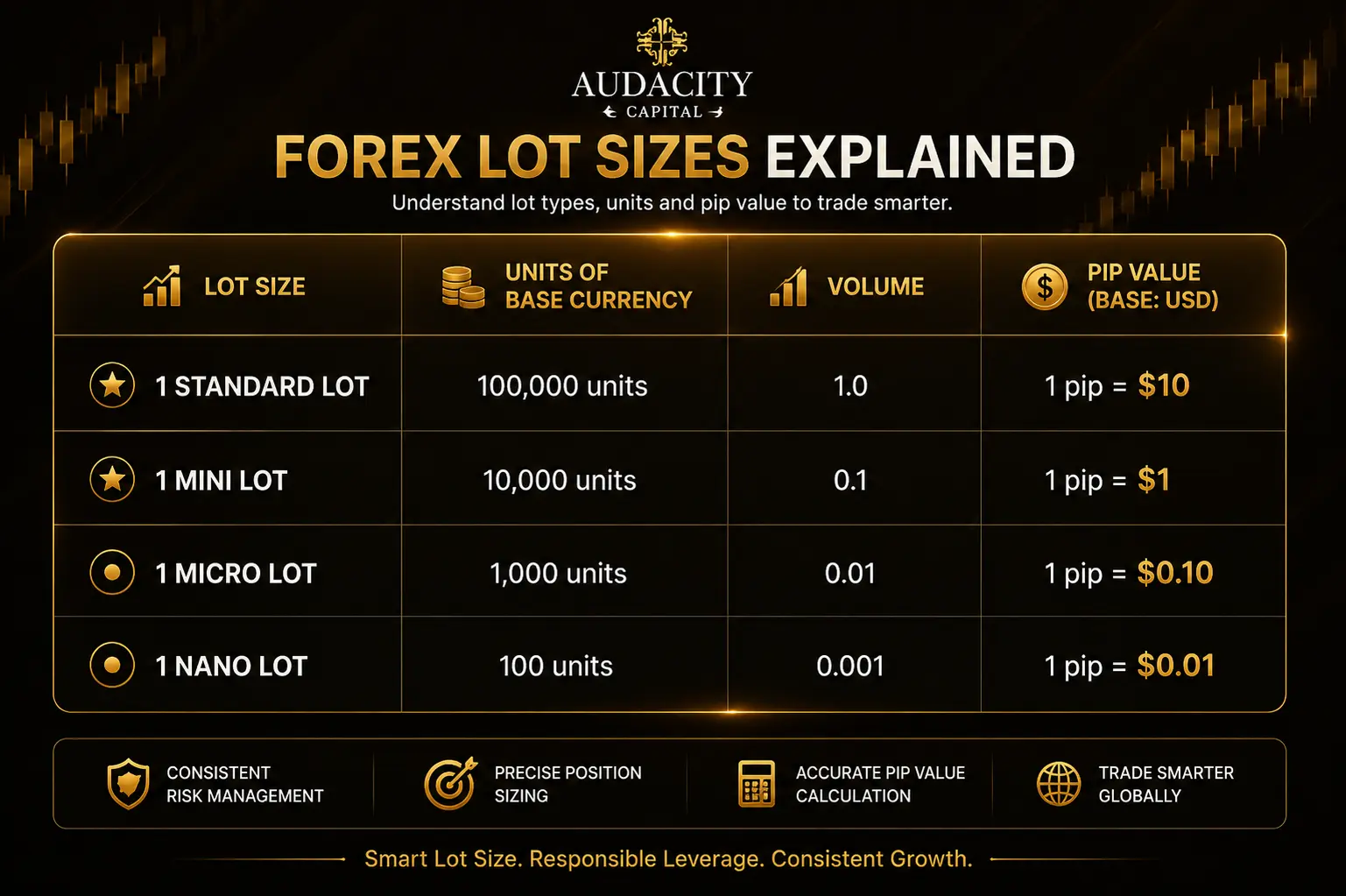
Lot Type | Units | Trading Volume | Approximate Pip Value |
|---|---|---|---|
Standard Lot | 100,000 | 1.00 | ~$10 |
Mini Lot | 10,000 | 0.10 | ~$1 |
Micro Lot | 1,000 | 0.01 | ~$0.10 |
Nano Lot* | 100 | 0.001 | ~$0.01 |
*Not all brokers offer nano lots.
Why Lot Size Matters
Your lot size directly affects your trading results.
For example:
Standard Lot
50-pip profit
↓
Approximately $500
Mini Lot
50-pip profit
↓
Approximately $50
Micro Lot
50-pip profit
↓
Approximately $5
The larger the lot size, the greater both the potential profit and the potential loss.
Professional traders don't choose the largest possible lot—they choose the appropriate lot size based on their risk management plan.
What Is Leverage in Forex?
Leverage allows traders to control a much larger trading position than their account balance would normally allow.
Instead of paying the full value of a trade, traders only need to deposit a small percentage known as margin.
For example:
Account Balance
↓
$1,000
Broker Leverage
↓
1:100
Maximum Position Size
↓
$100,000
Although you only have $1,000, leverage allows you to control a position worth $100,000.
Leverage increases buying power—but it does not change market risk.
If the market moves against your position, losses increase just as quickly as profits.
Common Forex Leverage Ratios
Leverage | Margin Required |
|---|---|
1:10 | 10% |
1:20 | 5% |
1:30 | 3.33% |
1:50 | 2% |
1:100 | 1% |
1:200 | 0.5% |
1:500 | 0.2% |
Higher leverage means less margin is required—but it also increases exposure if risk is not managed properly.
Difference Between Lot Size and Leverage
One of the biggest misconceptions among new traders is believing that lot size and leverage are the same thing.
They are closely related but perform different functions.
Lot Size | Leverage |
|---|---|
Determines trade volume | Determines buying power |
Affects pip value | Affects required margin |
Measured in lots | Expressed as a ratio |
Impacts profit and loss | Impacts capital efficiency |
A simple way to remember the difference is:
- Lot size determines how much you trade.
- Leverage determines how much capital you need to open that trade.
How Lot Size and Leverage Work Together
Although they have different roles, lot size and leverage work together whenever you place a trade.
Imagine you want to trade:
- EUR/USD
- One standard lot
- Position size: 100,000 units
Without leverage, you would need approximately $100,000 to open the trade.
With 1:100 leverage, you only need around $1,000 in margin to control the same position.
Notice what changes:
- Required margin decreases.
- Buying power increases.
What doesn't change:
- Pip value
- Position size
- Market risk per pip
Many beginners incorrectly assume higher leverage automatically means higher profits.
In reality, lot size determines how much money each pip movement is worth. Leverage simply reduces the amount of capital needed to open that position.
This is why professional traders calculate their position size first and only then consider the leverage available.
Why Understanding Both Matters
Successful traders don't think in terms of "How much leverage can I use?"
Instead, they ask:
- How much am I willing to risk?
- What is my stop-loss?
- What lot size matches that risk?
- How much margin will I need?
By approaching trades this way, they protect their capital while maintaining consistent position sizing.
Whether you're trading a personal account or working toward a funded account with Audacity Capital, mastering lot size and leverage is one of the first steps toward long-term trading success.
Read More About What leverage should a beginner use?
Forex Leverage Vs Forex Lot Size
Forex leverage and lot size are terms that all forex traders must understand to trade successfully. The two have a connection, which makes the terms confusing for new forex traders. Here are some of their differences that will help you understand how to use them;
Definition: A lot size is basically the amount of currency units you buy or sell in every transaction. On the other hand, a leverage is the amount you borrow from your broker to the amount you own.
Representation: Forex lot size are mainly represented in currency units, for example 100,000 or 1000 units. On the other hand, leverage is represented in ratio, e.g. 1:10 or 1:1000.
Limit: The maximum lot size in forex trading is 100,000 units, which is the standard lot. The minimum is a Nano lot, which equates to 100 units. With leverage, you can choose up to 1:5000 and the least is 1:1. However, this mainly depending with the broker you are using.

Funded Trader Program
Get Funded NowMargin Explained: The Link Between Lot Size and Leverage
When traders discuss leverage, they almost always mention margin. While lot size determines the size of your trade and leverage determines your buying power, margin is the amount of money required to open and maintain that trade.
Think of margin as a security deposit rather than a fee. It isn't a trading cost—instead, it's the portion of your account balance that is temporarily reserved while your trade remains open.
For example, suppose you want to trade 1 Standard Lot (100,000 units) of EUR/USD.
- Without leverage, you would need approximately $100,000 to open the trade.
- With 1:100 leverage, you only need approximately $1,000 as margin.
The remaining value of the position is effectively made available through leverage.
This allows traders with smaller account balances to participate in larger market movements without depositing the full contract value.
Margin Example
Account Balance | $5,000 |
|---|---|
Trade Size | 1 Standard Lot |
Position Value | $100,000 |
Leverage | 1:100 |
Margin Required | $1,000 |
Free Margin Remaining | $4,000 |
Notice that your profit and loss are still based on the full trade size, not the margin deposited.
How to Calculate Lot Size in Forex
Choosing the correct lot size is one of the most important decisions you make before entering a trade. Rather than selecting an arbitrary position size, professional traders calculate their lot size based on how much they are willing to risk.
Lot Size Formula
Lot Size =Risk Amount ÷ (Stop Loss × Pip Value)
Example
Let's assume:
- Account Balance = $10,000
- Maximum Risk = 1%
- Risk Amount = $100
- Stop Loss = 50 pips
- Pip Value = $10
Calculation:
Lot Size=100 ÷ (50 × 10)=0.20 Lots
A position size of 0.20 lots ensures that a 50-pip loss equals approximately $100, which matches your planned risk.
This approach keeps your risk consistent regardless of market conditions.
How to Calculate Leverage
Leverage determines the relationship between your account balance and your trading position.
Formula
Leverage =Position Size ÷ Account Equity
Example
Account Balance
↓
$2,000
Trade Size
↓
$100,000
Leverage
↓
100,000 ÷ 2,000
=
1:50
Although the leverage available allows you to open larger positions, it doesn't mean you should always use the maximum amount.
Professional traders often use lower effective leverage because their focus is protecting capital rather than maximizing exposure.
Real Trading Examples
Example 1 – Conservative Trader
Account Balance:
$5,000
Risk Per Trade:
1%
Risk Amount:
$50
Stop Loss:
50 pips
Recommended Position:
0.10 Mini Lot
Profit if trade gains 100 pips:
Approximately $100
Loss if stop-loss is hit:
Approximately $50
Example 2 – Experienced Trader
Account Balance:
$25,000
Risk:
1%
Risk Amount:
$250
Stop Loss:
50 pips
Recommended Position:
0.50 Lots
Profit on 100-pip move:
Approximately $500
Example 3 – High Leverage Doesn't Mean Higher Profit
Trader A
0.10 Lot
1:30 Leverage
Trader B
0.10 Lot
1:500 Leverage
If EUR/USD moves 50 pips:
Trader A Profit
≈ $50
Trader B Profit
≈ $50
The profit is identical because the lot size is identical.
The only difference is that Trader B required less margin to open the trade.
This is one of the biggest misconceptions among beginner Forex traders.
How to Choose the Right Lot Size
The best lot size depends on several factors:
- Your account balance
- Risk tolerance
- Stop-loss distance
- Trading strategy
- Experience level
Recommended Lot Sizes
Trader | Recommended Lot Size |
|---|---|
Beginner | Micro Lots (0.01) |
Intermediate | Mini Lots (0.10) |
Experienced | Standard Lots (1.00+) |
Beginners should prioritize learning proper risk management instead of maximizing profits. Smaller lot sizes reduce emotional pressure and provide valuable trading experience.
How to Choose the Right Leverage
Higher leverage is often attractive because it allows traders to control larger positions with less capital. However, professional traders understand that leverage should support a strategy—not replace it.
General Guidelines
Experience | Suggested Leverage |
|---|---|
Beginner | 1:10 – 1:30 |
Intermediate | 1:30 – 1:100 |
Experienced | Depends on strategy and risk management |
The right leverage is the one that enables you to execute your trading plan without exposing your account to unnecessary risk.
Risk Management Best Practices
Understanding lot size and leverage is only part of becoming a successful trader. The most profitable traders focus on preserving capital before generating returns.
Follow these best practices:
- Never risk more than 1–2% of your account on a single trade.
- Calculate your lot size before entering every position.
- Always use a stop-loss order.
- Avoid increasing lot sizes after a losing streak.
- Do not use maximum leverage simply because it is available.
- Maintain a minimum 1:2 risk-to-reward ratio whenever possible.
Remember:
Successful trading is built on consistency—not oversized positions.
Common Mistakes Traders Make
Confusing Lot Size with Leverage
Many traders believe increasing leverage automatically increases profits. In reality, lot size determines profit and loss, while leverage only affects margin requirements.
Using Maximum Leverage
Just because your broker offers 1:500 leverage doesn't mean you should use it.
Higher leverage increases the speed at which losses accumulate if risk isn't controlled.
Ignoring Position Sizing
Choosing random lot sizes without calculating risk is one of the fastest ways to damage a trading account.
Trading Without a Stop-Loss
Even the best trading strategy will experience losing trades.
A stop-loss protects your capital and ensures one trade doesn't significantly impact your account.
Risking Too Much on One Trade
Professional traders think in percentages, not dollars.
Limiting risk to 1–2% per trade allows traders to survive inevitable losing streaks.
How Audacity Capital Helps Traders Manage Risk
At Audacity Capital, risk management is at the core of every funded trading program.
Whether you choose the Ability Challenge, Ability One, or Funded Trader Program (Instant Funding), traders are encouraged to build disciplined habits by understanding position sizing, lot size, leverage, and drawdown management.
Instead of focusing solely on generating profits, successful funded traders learn how to preserve capital while trading consistently. By combining proper lot sizing with responsible use of leverage, traders can develop sustainable trading practices that support long-term growth and progression through Audacity Capital's scaling plan.
Conclusion
Understanding lot size and leverage in Forex is fundamental to becoming a successful trader. While lot size determines the size of your position and the value of each pip movement, leverage determines the amount of capital required to open that position. Neither concept should be viewed in isolation—both work together to influence your overall risk exposure and trading performance.
Professional traders focus on position sizing first, then use leverage responsibly to manage capital efficiently. By combining proper lot sizing, disciplined risk management, and realistic leverage, you can protect your account while building long-term consistency.
If you're ready to apply these principles with a funded account, Audacity Capital offers multiple funding programs designed to help traders grow through disciplined risk management, transparent trading rules, and account scaling opportunities of up to $2 million.
Guides About Forex For Beginners
Frequently Asked Questions
Too much leverage can be very risky, especially if you are trading with a small amount of money. It is advisable to choose a 1:1 leverage if you are a beginner forex trader to avoid blowing your account.
Understanding lot size is important because they do affect profits. For example, if you choose a standard lot size, it means that for every 1 pip movement you will either lose or gain $10.
Lot size and leverage are closely related because leverage enables traders to open larger lot sizes with limited capital. A higher leverage allows traders to take bigger positions, but it also increases potential risk.
Higher leverage can increase potential profits, but it also increases potential losses. While it allows traders to control larger positions, it can amplify both gains and risks.
Lot size directly impacts how much you can gain or lose per trade. Larger lot sizes increase exposure to the market, which means higher potential profit but also higher risk.
Yes, lower leverage is generally considered safer for beginners because it reduces the risk of large losses. It allows traders to manage their exposure more carefully.
Using a large lot size with high leverage significantly increases risk. Even small market movements can result in substantial gains or losses.
Yes, traders can use leverage without increasing lot size. Leverage simply allows flexibility in capital usage and does not require increasing trade volume.
Understanding both helps traders manage risk effectively and avoid overexposure in the market.
Most professional traders use leverage cautiously. They focus more on risk management rather than maximizing position size.
Lot size determines the volume of your trade, while leverage determines how much capital is required to open that position.
No. Pip value is determined by your lot size, not your leverage.
Micro lots (0.01) are generally the most suitable option because they allow beginners to gain experience while limiting potential losses.
Not necessarily. Higher leverage reduces the required margin but does not change your pip value or guarantee greater profits.
Many beginners start with leverage between 1:10 and 1:30, as it provides sufficient buying power while encouraging disciplined risk management.
Yes. Trading without leverage is possible, but you'll need enough capital to cover the full value of your trading position.

Ready to apply disciplined risk to crypto? Explore Audacity Capital's new crypto instruments and bring your trading strategy.
Learn MoreNewsletter
Join our newsletter to stay up to date on features and releases.
Join Our Social & Community

Start Your Journey Today With Our Free Trial
Proudly showcase your skills and accomplishments through certificates and get recognition for your hard work and dedication from potential investors and peers.
Free TrialRelated Articles
Keltner Channel Trading Strategy: How to Read Volatility With Context
Discover how Keltner Channels measure market volatility, spot trend pullbacks, and confirm breakouts. Includes setup rules, settings, and testing methods.

Mean Reversion Trading Strategy Explained (2026)
Prices that stretch too far tend to snap back to an average, but only in the right market. Learn the tools, the setup, and the trend risk.
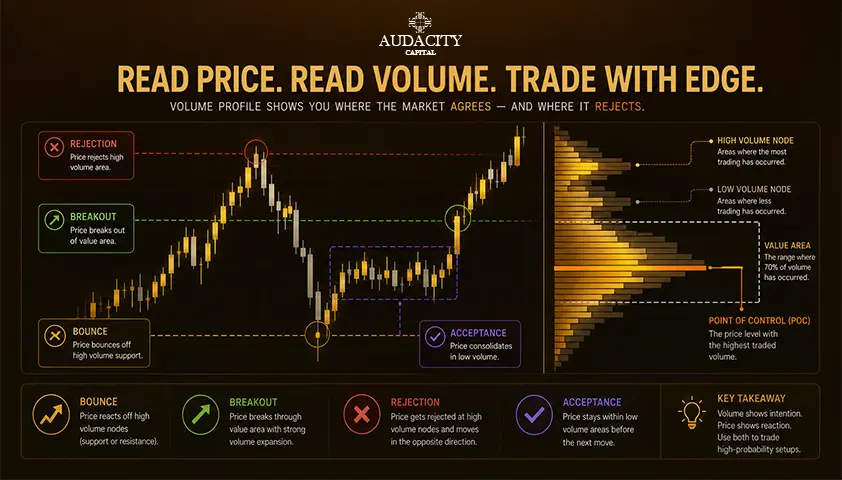
Volume Profile Trading Strategy Guide: Setups & Nodes
A Volume Profile trading strategy shows where the market spent the most volume. Learn POC, value areas, volume nodes, and 4 setups for ES, NQ, and forex.
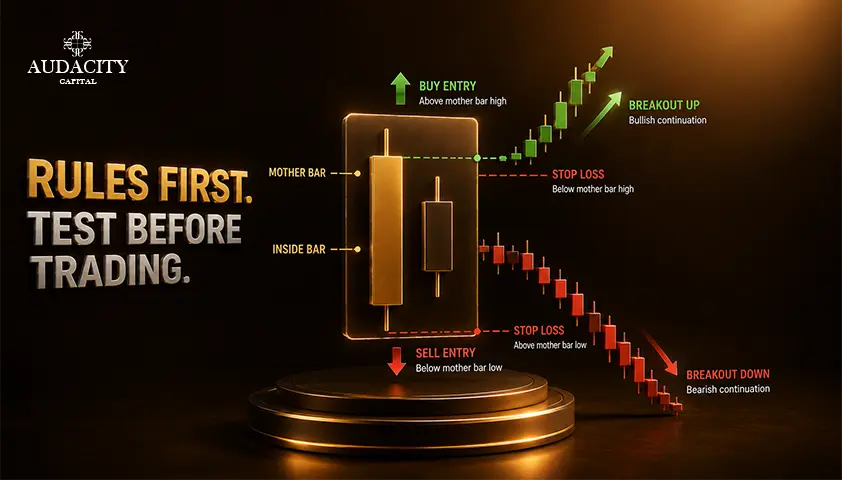
Inside Bar Trading Strategy: Rules, Entries and Backtest Guide
Learn a rule-based inside bar trading strategy. Get the pattern definition, three entry models, stop and target logic, and a backtest framework for your market.